Writing from a place of safety
Writing from a place of safety isn’t just a concept I teach. It’s one of my core business values—and the reason I’m still writing at all.
For a long time, I believed that good writing required a kind of emotional risk-taking that felt sharp and exposed.
Dig deep. Go further. Push through the hard parts.
And sometimes that is true.
But what I’ve learned—through my own writing life and through working with hundreds of writers—is this:
Sustainable, meaningful writing doesn’t begin with courage. It begins with safety.
What I Mean by “Safety”
Writing from a place of safety doesn’t mean avoiding hard stories. It doesn’t mean watering things down or staying surface-level and comfortable.
It means creating conditions where your nervous system isn’t constantly on high alert while you’re trying to write.
Safety might look like:
Knowing you can stop writing whenever you need to
Trusting that you don’t have to use everything you write
Letting yourself write toward something, not just through something
Choosing when and how your work is shared—or not shared at all
When we don’t feel safe, writing can start to feel scary, heavy, or impossible. Words that normally flow may feel threatening. Our bodies may tense up, our minds may freeze, and the act of writing can feel like something to dread rather than a source of discovery.
Safety allows you to stay in relationship with your work—especially when the work is personal, emotional, or unfinished—so that even difficult stories can be explored with care, curiosity, and presence.
Why This Matters in My Work
Every part of my work comes back to this idea.
My children’s books—the Pixie series—deal with big feelings, anxiety, manipulation, and unhealthy relationships. They were written with great care, not just for young readers, but for the writer creating them. I had to learn how to tell the truth without retraumatizing myself in the process.
My current work-in-progress, Yelling at Dead People, is deeply vulnerable. It explores grief, parenting, love, anger, and loss. There is no way to write a book like that by pushing harder or “powering through.” It requires trust, pacing, boundaries, and permission to step away.
Safety isn’t optional in this kind of work—it’s essential.
Writing Is Not an Emergency
One of the most damaging myths writers absorb is urgency.
That we need to:
Get it all down now
Go straight to the most painful part
Capture everything before it disappears
But writing isn’t an emergency.
You’re allowed to move slowly.
You’re allowed to circle a story.
You’re allowed to write around something until you’re ready to write into it.
When writers feel safe, they don’t write less—they write longer. They keep going.
What Writing From Safety Looks Like
Writing from a place of safety is often built through small, intentional choices:
Knowing you can stop at any time
Writing with a clear container (time limits, forms, prompts)
Choosing when and how your work is shared
Trusting that not everything you write needs to be published or even kept
It also means understanding that no one is entitled to your story—not readers, not workshops, not publishing timelines.
You decide the pace. You decide the shape. You decide the distance.
Creating Safety on the Page
You don’t need a perfect room or endless time to write safely. Often, it’s about small, intentional choices.
You might try:
Writing with a clear beginning and end time
Starting with neutral or grounding details before emotional ones
Writing in a form that feels contained (lists, letters, fragments)
Ending your writing session with something regulating—stretching, stepping outside, making tea
And just as important: reminding yourself that no one is entitled to what you write.
You get to decide what stays private. What gets shared. What gets revised. What never leaves the notebook.
This Is the Work
Writing from a place of safety is not a workaround. It’s not a soft option. It’s not something you graduate out of.
It’s the foundation that allows writers to keep showing up—to the page, to their stories, and to themselves.
If writing has felt hard lately, it may not be because you’re doing it wrong. It may be because what you need isn’t more pressure—but more safety.
Start there. The rest will follow.
How I Can Support Your Writing From a Place of Safety
If you’d like guidance, structure, and encouragement while practicing safe writing, here are a few ways I can support you:
Sign up for my newsletter to receive the Writing From a Place of Safety PDF—a gentle, actionable exercise you can return to whenever you need it.
1:1 creative mentorships, where we work together on your writing in a safe, structured, and encouraging space.
Writing spaces, each including safety resources, optional writing groups, and prompts designed to help you stay connected to your work without pressure.
The Courage to Write Workshop, a focused, supportive program where writers explore difficult stories, strengthen their voice, and learn to write from a place of safety while feeling grounded and guided.
Whatever your approach, the goal is the same: to help you keep showing up to your stories with curiosity, care, and confidence.
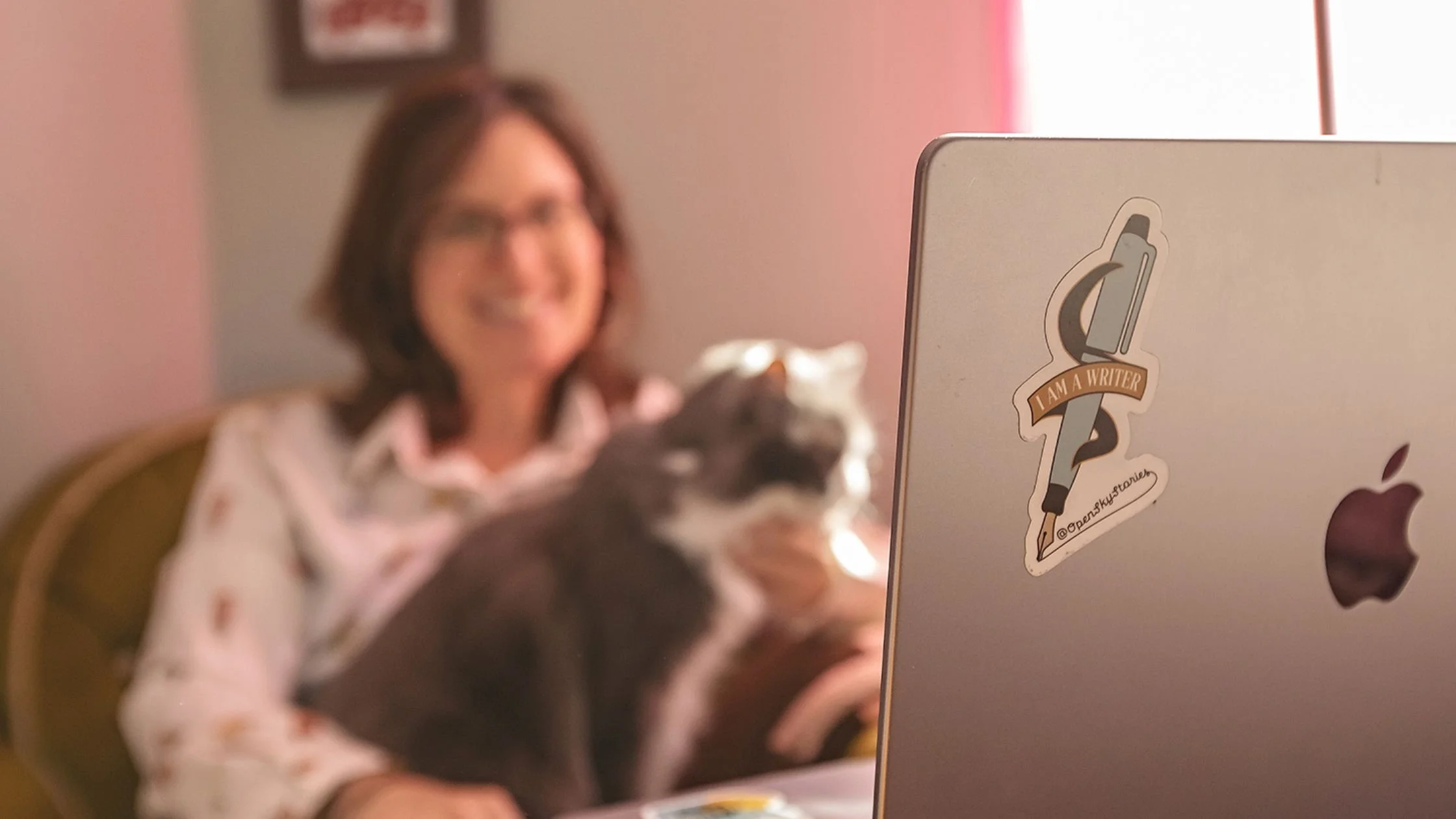
Hi, I’m Erica.
I’m an author, writing coach, and founder of Open Sky Stories. I write children’s books that help kids explore feelings and relationships, including Pixie and the Bees and Pixie and the Fox, and I’m currently working on a creative nonfiction manuscript called Yelling at Dead People. I also lead workshops and mentorships to help writers find safety, clarity, and confidence on the page. I live with my muse—an 18-year-old cat, Lucy who insists on supervising every word I write.
