If you've ever sat down to write and thought, I have absolutely nothing to say, Morning Pages offer a surprisingly simple answer:
Write anyway.
Morning Pages are three pages of longhand, stream-of-consciousness writing done first thing in the morning. The practice was introduced by Julia Cameron in The Artist's Way, her influential 1992 book about creativity and creative recovery. Cameron describes Morning Pages as one of the foundational tools of the creative practice.
I've been doing Morning Pages for years. I started in the fall of 2019 and was quite skeptical. Actually, to be honest, I’d tried once before and kept falling asleep on my notebook!
This time, I was determined to give them a fair go. Within about three months of starting Morning Pages, I quit my job, ended a three-year relationship and launched Open Sky Stories.
I was no longer a skeptic.
Look, I'm not suggesting that Morning Pages caused those things. But I do think something happened when I started regularly putting my unfiltered thoughts on paper: I started hearing myself more clearly.
So what exactly are Morning Pages? Where did the idea come from? And how are they different from simply keeping a journal?
Let's start with the history.
What is stream-of-consciousness writing?
Before there were Morning Pages, there was the idea of the stream of consciousness.
In 1890, psychologist and philosopher William James published The Principles of Psychology. In his discussion of consciousness, James argued that our thoughts don't arrive as separate, neatly packaged units. Consciousness flows.
He wrote that consciousness does not appear to itself "chopped up in bits" but instead flows like a river or stream. He called it the "stream of thought, of consciousness, or of subjective life."
Think about your own mind on an ordinary morning.
You wake up thinking about a dream you just had. That reminds you of something you need to do today. That reminds you of an email you forgot to answer. The email makes you think about a meeting. Suddenly you're thinking about your grocery list, something your kid said yesterday, a book you're reading and whether you remembered to put the laundry in the dryer.
Our thoughts don't arrive in orderly paragraphs.
They wander. They interrupt each other. They circle back. They make strange connections.
James was describing the nature of consciousness, not giving writers instructions for how to write. But the idea of representing consciousness on the page became increasingly important to writers in the decades that followed.
Dorothy Richardson and stream-of-consciousness fiction
British writer Dorothy Richardson is an important part of this story.
Her novel Pointed Roofs, published in 1915, was the first volume of what became her thirteen-volume Pilgrimage series. The series is now closely associated with the development of stream-of-consciousness fiction because Richardson's writing follows the perceptions and thoughts of her protagonist, Miriam Henderson, in ways that depart from conventional narrative.
There's an important distinction here.
William James was exploring how consciousness works. Dorothy Richardson was exploring how consciousness could be represented in literature.
Richardson herself actually disliked the term "stream of consciousness," which literary critic May Sinclair later used to describe her work.
Morning Pages are sometimes described simply as "stream-of-consciousness writing." And while there is a connection, Morning Pages are not a literary technique. You're not trying to write a novel like Dorothy Richardson.
You're doing something much more personal. You're putting your own thoughts on the page without trying to control where they go.
Julia Cameron and the Morning Pages practice
That's where Julia Cameron comes in.
In The Artist's Way, Cameron turned stream-of-consciousness writing into a specific creative practice: three pages of longhand writing every morning, about absolutely anything. Cameron continues to describe Morning Pages as "three pages of longhand, stream-of-consciousness morning writing about absolutely anything."
You're not trying to produce good writing. You're not trying to create a polished piece of prose. You're not trying to make sense. You're not even trying to discover something profound.
You're simply following your thoughts.
You might write about your coffee. You might complain about the weather. You might make a list of things you need to do. You might write that your cat is currently meowing at the wall and try to imagine what it could be meowing at. You might spend half a page writing about how you have absolutely nothing to say.
It all counts.
That is one of the things I love about Morning Pages. They give you permission to write without asking the writing to perform.
Morning Pages versus journaling
So, are Morning Pages journalling?
Technically, you could certainly consider them a form of journalling. Cameron herself has published Morning Pages journals, and the practice is a form of personal writing.
But there is a difference between Morning Pages and the way many of us think about keeping a journal.
Journalling often has an object. You might be recording what happened during your day, processing an experience, exploring your feelings, working through a problem, documenting your life or reflecting on a particular question.
Morning Pages don't require a subject. You don't have to have anything to say. You don't have to know why you're writing and you don't have to decide what the writing is "about."
The practice is less about what you're writing and more about the experience of writing without editing, censoring or directing yourself.
A journal might ask, "How am I feeling about this?"
Morning Pages might begin with, "I don't know what to write this morning."
And then you keep going.
Why I believe in the actual Morning Pages method
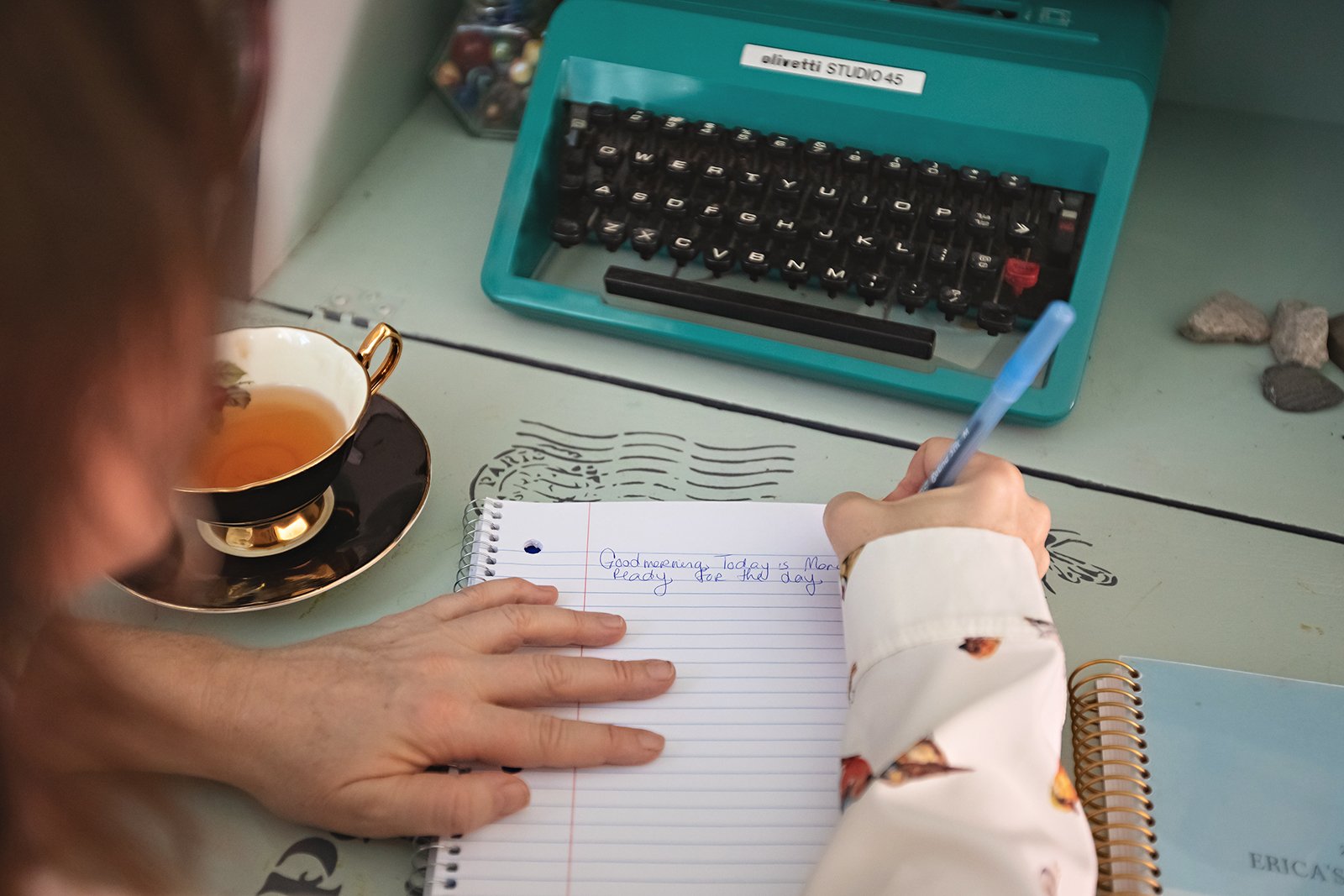
If you're curious about Morning Pages, I recommend giving Cameron's method a real try: write by hand, write three pages, and do it in the morning.
There is something useful about the constraints.
Three pages is enough space to get past the obvious stuff. Writing by hand slows you down. Doing it in the morning means you're putting your own words on the page before the day fills your head with everyone else's.
And that was certainly part of my experience.
When I began Morning Pages, I wasn't setting out to make major changes to my life. But within about three months, I had quit my job, ended a three-year relationship and started Open Sky Stories.
I don't believe Morning Pages magically told me what to do.
I do believe they gave me regular, uninterrupted space to listen to myself.
I'm not going to tell you that Morning Pages will cause you to quit your job, end your relationship or start a business. They might simply help you notice what you already know.
Or they might be three pages of complaining about your neighbour.
Both are perfectly acceptable outcomes.
You don't have to do Morning Pages perfectly
Here's where I want to push back against something that can happen with any creative practice.
We take something that is supposed to help us create, and we turn it into another opportunity to judge ourselves.
Did I do it right?
Did I write enough?
Did I do it every day?
Does it count if I wrote at night?
Does it count if I only wrote two pages?
I am a big believer in trying the actual practice before deciding you need to change it. But I don't want you to decide that if you can only write two pages, you shouldn't bother.
If you work nights, writing in the evening may make much more sense for you.
If you have small children climbing on you at 6:30 in the morning, "first thing in the morning" may not be remotely realistic.
If you have twenty minutes and can write two pages, write two pages.
The method is a tool. It is not a test you pass or fail.
If the choice is between doing Morning Pages imperfectly and not writing at all, I'm voting for the imperfect writing.
What can Morning Pages do for a writer?
I'm careful about making grand promises about any writing practice. Morning Pages aren't a magic cure for writer's block, and there isn't a requirement that you emerge from your notebook every morning with a brilliant new idea or life change.
But the practice can give you something writers need very badly: regular experience putting words on the page without immediately judging them.
Morning Pages can help you practise:
writing without an audience;
following a thought instead of forcing one;
noticing ideas, questions and patterns that keep returning;
getting past the first layer of mental clutter;
loosening your grip on perfection;
building a regular relationship with writing; and
becoming more comfortable with writing that doesn't need to be good.
You need somewhere to be a terrible writer. You need somewhere to ramble, repeat yourself, contradict yourself and write something completely ridiculous.
Morning Pages can be that place.
No one is reading. No one is grading you. No one needs to understand what you mean.
And sometimes, when you stop demanding that every sentence be good, you discover a sentence that is.
Morning Pages aren't the writing. They're what can make room for the writing.
This is probably the biggest reason I recommend Morning Pages to writers.
You don't have to turn them into anything.
You don't have to mine your pages for book ideas. You don't have to save your best sentences. You don't have to reread them. You don't have to publish anything you write.
Sometimes you might discover an idea you want to explore.Sometimes you might realise you've been avoiding something. Sometimes you might stumble onto a sentence that makes you stop and think, Oh. And sometimes you'll write three pages of absolute nonsense and throw them in the recycling.
The value isn't always in the words you keep.
Sometimes the value is in practising writing without demanding that every word earn its place.
You don't have to know what you want to say before you begin.
You can discover it on the page.
How to start Morning Pages
If you've never tried Morning Pages, you don't need a special notebook, a beautiful desk or an elaborate morning routine.
Get yourself some paper and a pen.
Then, if you can, try the original practice for a couple of weeks before deciding what you think of it.
Write three pages by hand in the morning. Write whatever comes to mind. Don't edit yourself while you're writing. Don't worry about whether it is interesting or useful or even coherent.
If you get stuck, write about being stuck.
If you have nothing to say, write that you have nothing to say.
If you spend an entire page complaining about having to write three pages, congratulations. You are writing Morning Pages.
And if three pages simply isn't realistic right now, start where you are.
Two pages.
One page.
Ten minutes.
The point is not to create another way to fail at writing. The point is to create a regular place where your words can show up.
You are a writer. Get writing.
There are plenty of ways to think about writing.
We can read about writing. We can take courses about writing. We can buy beautiful notebooks. We can organise our desks. We can wait for inspiration.
Or we can put a pen on paper and start.
Morning Pages are one way to do that.
They aren't magic. They aren't a requirement for being a writer. And they aren't the only way to build a writing practice.
But they are a remarkably simple way to give yourself regular time with your own words.
And sometimes, that is exactly where the writing begins.
Want to write more regularly? That's where Writing With Friends could come in.
Writing With Friends is my writing group that gives you regular writing time, accountability and a community of people who are also putting words on the page. Because sometimes you don't need another lesson about writing.
You just need to write.
About Erica Richmond
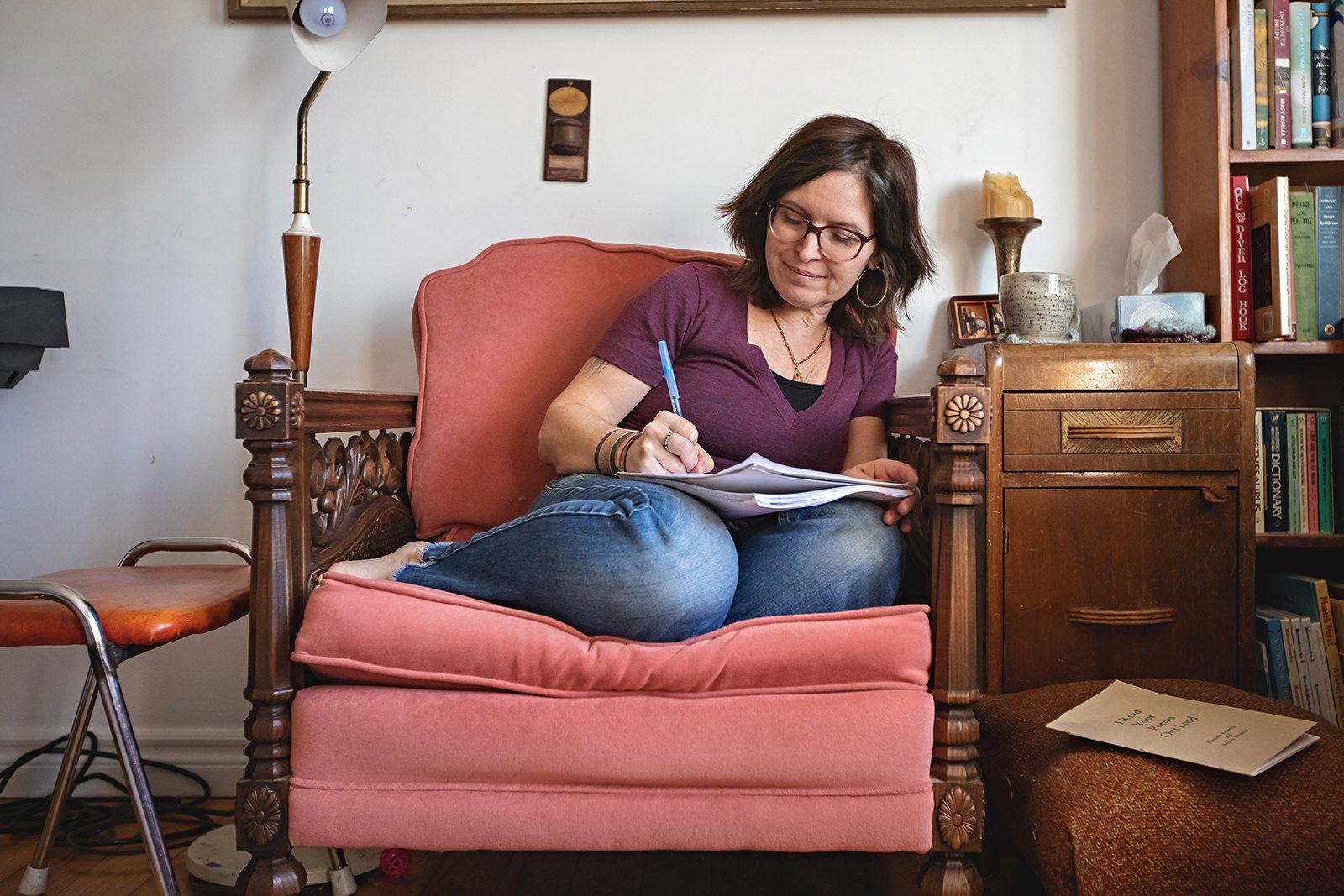
Erica Richmond is a Canadian writer of brave stories, public speaker, and writing mentor based in Peterborough, Ontario. Her work explores grief, healing, mental health, complicated relationships, and the messy, surprising ways we find our way back to ourselves.
She is the author of Pixie and the Bees and Pixie and the Fox, and is currently writing Yelling at Dead People, an experimental memoir-in-essays about complicated grief, motherhood, anger, love, and healing after the death of her children’s father.
Erica also speaks and teaches on writing, communication, storytelling, and the courage it takes to put our words into the world. Through her 1:1 writing mentorships, she helps writers make space for the stories they want to tell and develop the confidence to tell them in their own way.
