Workshops & Webinars
Writing is a practice. Sometimes you need a little instruction. Sometimes you need a place to write. Sometimes you need someone to remind you that you actually can.
These workshops and lessons are designed to help you get words on the page, experiment with form, pay better attention, and build a writing practice that works for your actual life.
Some are live. Some are on demand. All of them are practical, creative, and rooted in the belief that your words matter.
Live Writing Workshops
Courage to Write: A Four-Week Writing Intensive
Live October 2026 · $497 CAD · Limited to 12 writers
You know you want to write. Maybe you've been thinking about the book, story, essay, or project for ages. Maybe you've started and stopped more times than you'd like to admit.
This is a place to actually write.
The Courage to Write Intensive is a four-week live program for writers who want to move through the things that get in the way of writing and make meaningful progress on the page.
We'll look at creative blocks, the inner critic, writing practices, and the wonderfully messy business of making something. You'll get teaching, writing time, practical exercises, a workbook, and plenty of encouragement to keep going.
And because writing is easier when you're not doing it alone, your registration also includes access to Safety in Numbers, my regular online co-writing sessions.
You'll get:
Four live Zoom sessions throughout October
Teaching and guided writing exercises
A workbook and between-session writing practices
Access to Safety in Numbers co-writing sessions
Recordings of the teaching sessions
A small group of writers to write alongside
October 4 · October 13 · October 18 · October 25
On-Demand Writing Workshops
The Courage To Write
$49.99
Writing takes courage. Courage grows in safety.
This on-demand workshop is for writers who want to understand what's getting in the way of their writing, work with their inner critic, and find their way back to the page.
We'll look at some of the common things that make writing difficult, explore ways to create a safer writing practice, and consider what it might look like to write with more curiosity and less self-judgment.
You'll get approximately one hour of video teaching plus a workbook you can work through at your own pace.
Come when you're stuck. Come when you're starting over. Come because you want to write and need a little help getting there.
Individual Writing Lessons
Want to learn a particular form or practice? These short, focused lessons let you dig into one idea at a time.
Each lesson includes:
A pre-recorded instructional video you can watch at your own pace
A PDF with prompts, examples, reflections, and exercises
Ideas for taking the practice further in your own writing
Quilt essays invite us to work in fragments—small pieces of writing that stand alone and also speak to each other. This form values patience, intuition, and meaning over polish.
A list essay often begins as a simple collection of items, but it can grow into something much more layered and meaningful. Lists help us notice patterns, make connections, and reflect on our lives in surprising ways. This form can stand on its own—or become the foundation for a longer, more developed essay.
A hermit crab essay is a nonfiction essay written inside an existing structure. You borrow a recognizable form—a recipe, glossary, medical form, quiz, instruction manual, or checklist—and use it as the container for narrative.
A drabble is a piece of microfiction that is exactly 100 words (not including the title). Within this small, fixed container, writers craft a complete story—often focused on a single moment, shift, or realization—using precise language and implied meaning to engage the reader.
A panel essay is a piece of writing made up of separate sections (panels) placed side by side. A diptych has two panels A triptych has three panels Each panel can stand alone, but together they create a layered meaning through contrast, echo, and connection.
In this lesson, we'll explore the art of noticing: the practice of paying close attention to the ordinary moments, people, and places around us, and discover how curiosity and observation can transform everyday life into meaningful writing.
In this lesson, we’ll explore embodied writing: the practice of paying attention to physical sensation, emotion, memory, and sensory detail while we write. Together, we’ll look at how slowing down and reconnecting with the body can help create writing that feels more vivid, honest, and alive.
More Writing Experiences Are Coming
I'm always developing new ways to help writers experiment, learn, and get words onto the page.
That might mean a new craft lesson, a live workshop, a writing experiment, or something I haven't thought of yet.
If you want to hear about what's coming next, join my newsletter.
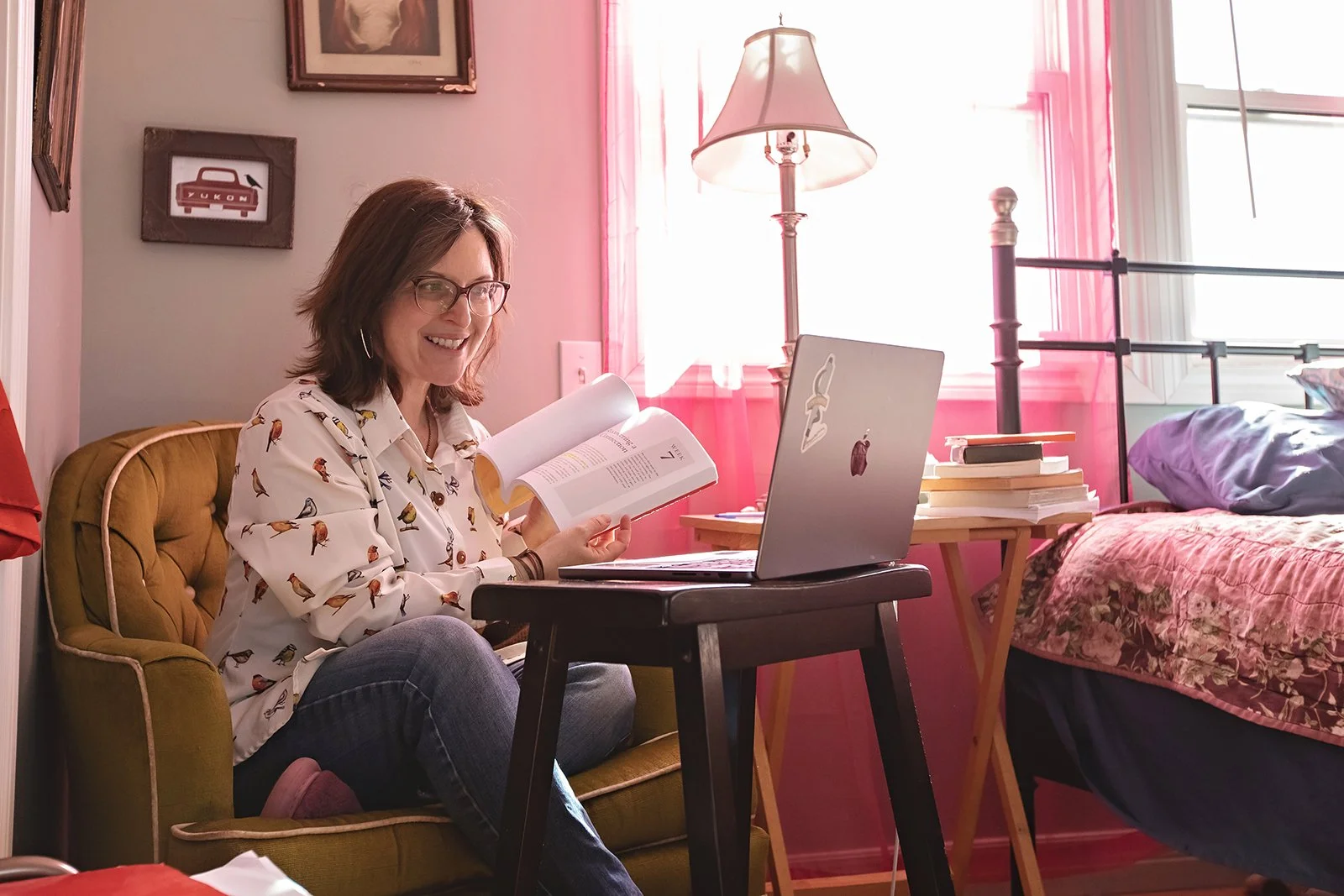
I'm Erica Richmond, an author, writing educator, mentor, and speaker based in Peterborough, Ontario.
I've published children's books, personal essays, creative nonfiction, and tiny books. I've taught writing and communication at the college level, led workshops for writers of all kinds, and spent a lot of time thinking about what helps people actually get words onto the page.
My approach is practical, curious, and grounded in safety.
I don't believe you need to become a different person to become a writer. You need opportunities to pay attention, experiment, take yourself seriously, and make things.
And sometimes you need someone to say: Yes. Write that.